What it is
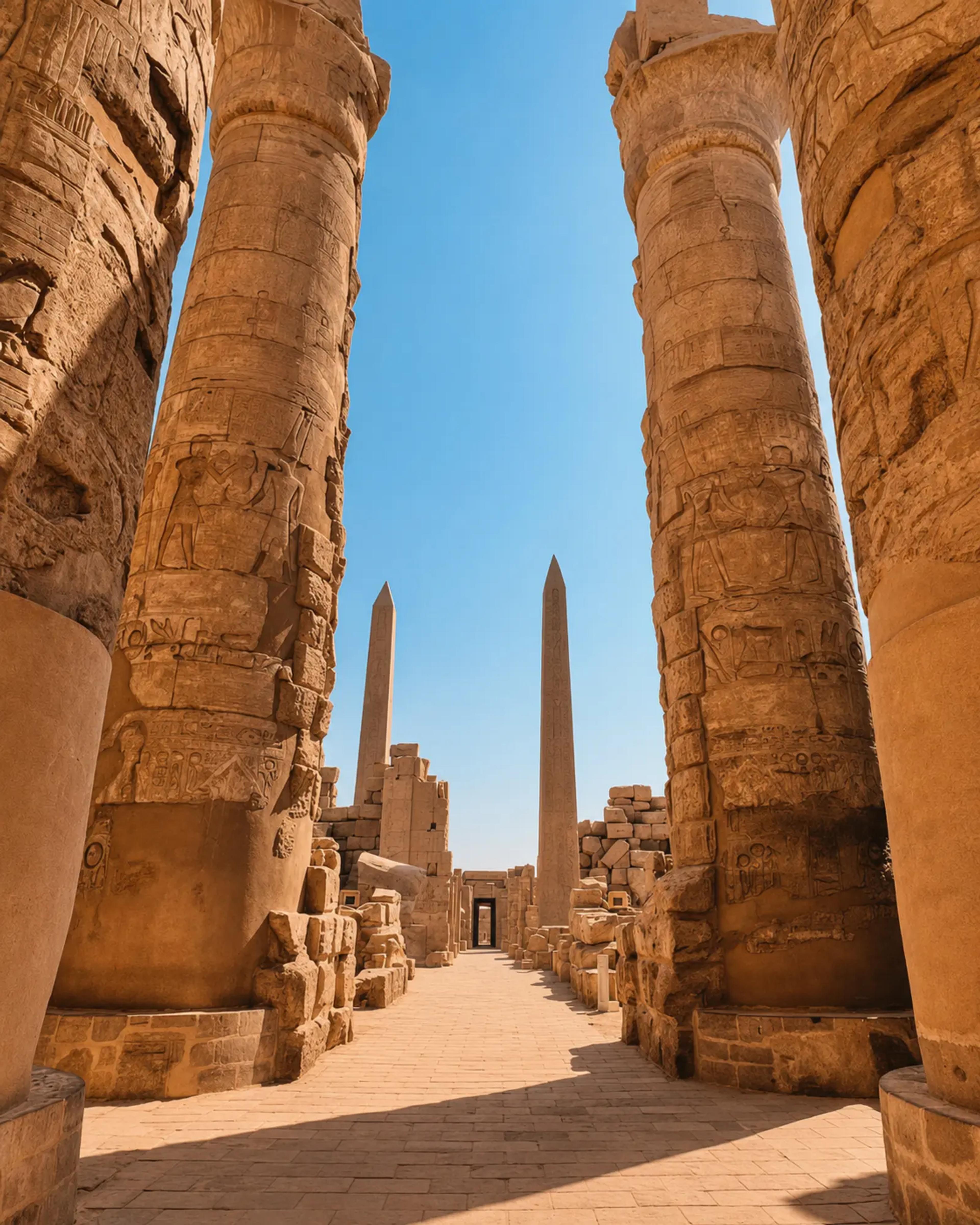
Karnak is a vast precinct of temples, chapels, pylons, and obelisks on the east bank of the Nile at Luxor, ancient Thebes. Built, demolished, enlarged, and modified continuously over a period of approximately 2,000 years — from the Middle Kingdom through the Ptolemaic period — it is the largest religious structure ever built. The complex covers more than 100 hectares and is primarily dedicated to the Theban triad: Amun-Ra, Mut, and Khonsu. The central Precinct of Amun-Ra is what most visitors see; the subsidiary precincts of Mut and Montu are largely unexcavated and accessible only to specialists.
Why it matters historically
The Amun cult and New Kingdom power — Amun-Ra was the state god of the New Kingdom (c. 1550–1070 BC); the wealth flowing into Karnak during this period is reflected in the scale of the construction. The high priests of Amun eventually controlled enough wealth to challenge the pharaoh.
The Hypostyle Hall — begun under Seti I and completed by Ramses II in the 19th Dynasty; 134 columns, the largest 21 metres tall; the carved reliefs on the northern and southern sections show measurably different stylistic hands — Seti I's reliefs are finer and more delicate than Ramses II's bolder, faster carving.
The Akhenaten interlude — Akhenaten built a series of temples to the Aten (the solar disc) within the Karnak precinct early in his reign, before moving the capital to Amarna. After his death the temples were dismantled and their blocks (talatat) were used as fill in other structures. Reassembled sections are now displayed in the Karnak Open Air Museum and Luxor Museum.
Hatshepsut and Thutmose III — two of the most significant single builders at Karnak; Hatshepsut erected four obelisks (two surviving, one fallen) and reorganised the central axis; Thutmose III built the Festival Hall and attempted to wall in Hatshepsut's obelisks rather than destroy them.
Continuous construction — the Avenue of Sphinxes connecting Karnak to Luxor Temple (3 km) was begun by Amenhotep III and completed under Nectanebo I over 1,000 years later; the most recent major addition was by the Ptolemies.
What to look for
The Hypostyle Hall — 134 columns: Stand at the entrance to this hall and look down its length — the columns are dense enough that the far wall disappears. Northern half (Seti I): examine the relief quality at eye height — figure edges are precise, eyes are naturalistic. Southern half (Ramses II): bolder, deeper cuts, faces slightly more schematic. Photo cue: 06:10–07:00, light entering through the highest column gaps, raking across relief surfaces.
Hatshepsut's obelisk — the taller standing obelisk (29 metres) is electrum-tipped; Hatshepsut wrapped its base in electrum inscriptions she calculated Thutmose III could not efface without destroying the structure entirely. Look at the base for the wall Thutmose built around it — the obelisk was hidden but not destroyed. Photo cue: early morning, low angle shooting the tip against pale sky.
The Sacred Lake — the largest ritual purification lake in Egypt; priests bathed here before entering the inner sanctuaries. The granite scarab statue of Amenhotep III at the corner is said to grant wishes if you walk around it seven times. Photo cue: dawn reflections of the Hypostyle pylon in still water.
The Festival Hall of Thutmose III (Akh-menu) — behind the main axis; unique tent-pole columns; the "botanical room" with carved plants and animals from Thutmose III's Syrian campaigns. Often quiet when the main halls are crowded.
The reassembled talatat blocks — Karnak Open Air Museum (additional ticket required) displays reassembled sections of Akhenaten's Aten temple; painted blocks in yellow, blue, and red.
The Precinct of Mut — accessible from the south of the main precinct; contains its own sacred lake and hundreds of black granite Sekhmet statues (the lioness goddess). Rarely crowded. Photo cue: Sekhmet statues in long-grass context; early morning.
The Avenue of Sphinxes — the processional way connecting Karnak to Luxor Temple begins here; the newly excavated avenue is at its most dramatic from the Karnak end looking south. Photo cue: dusk looking south; sphinx heads receding.
Practical visiting block
Best time to visit: 06:00–09:00 for the Hypostyle Hall light; or late afternoon (16:00+) if evening Sound & Light schedule permits. Midday is crowded and bright.
Tickets & fees:
Accessibility: Main processional axis is wide, mostly flat, some sandy sections. The Hypostyle Hall floor is stone and uneven but manageable. Outer courts are sandy. The Festival Hall area requires some navigation around standing blocks. Restrooms available near main entrance.
Walking distance: Entrance to far pylon: approximately 500 metres on main axis. Adding Sacred Lake, Festival Hall, and Precinct of Mut adds 1–2 km.
Restrooms: Available near main entrance only.
Tours that include this site
East Bank Day → /tours/east-bank-day — full morning visit, arriving before tour buses
Two-Day Luxor → /tours/two-day-luxor — Day 1 morning, the cornerstone of the first-time itinerary
Photographer's Day → /tours/photographers-day — dawn light session in Hypostyle Hall; return at dusk
Related sites
Luxor Temple → /luxor/luxor-temple — connected by the Avenue of Sphinxes; same processional axis
Valley of the Kings → /luxor/valley-of-the-kings — the pharaohs who built Karnak are buried across the river
Hatshepsut Temple → /luxor/hatshepsut-temple — Hatshepsut's major construction programmes at both sites illuminate each other