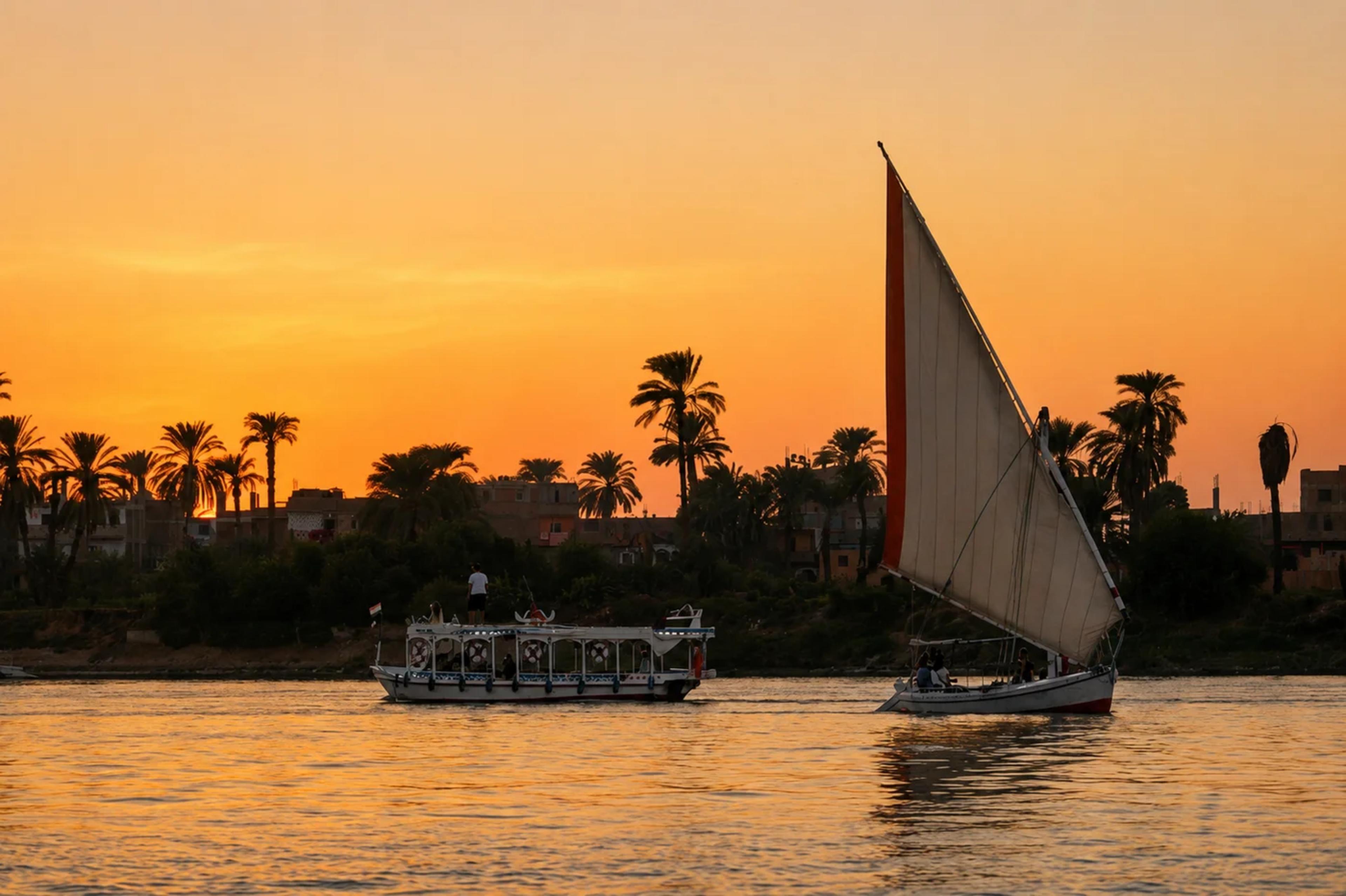
I take the public ferry from the East Bank every morning I am guiding on the West Bank. It is a ten-minute crossing on a flat-bottomed boat that costs two Egyptian pounds and runs from 5 a.m. until midnight. At 5:45 a.m. the other passengers are workers: men going to the agricultural fields that still run between the tourist sites and the limestone cliffs, women going to the village market, young men on scooters that they somehow manoeuvre onto the narrow deck. I am the only person dressed for a tomb visit.
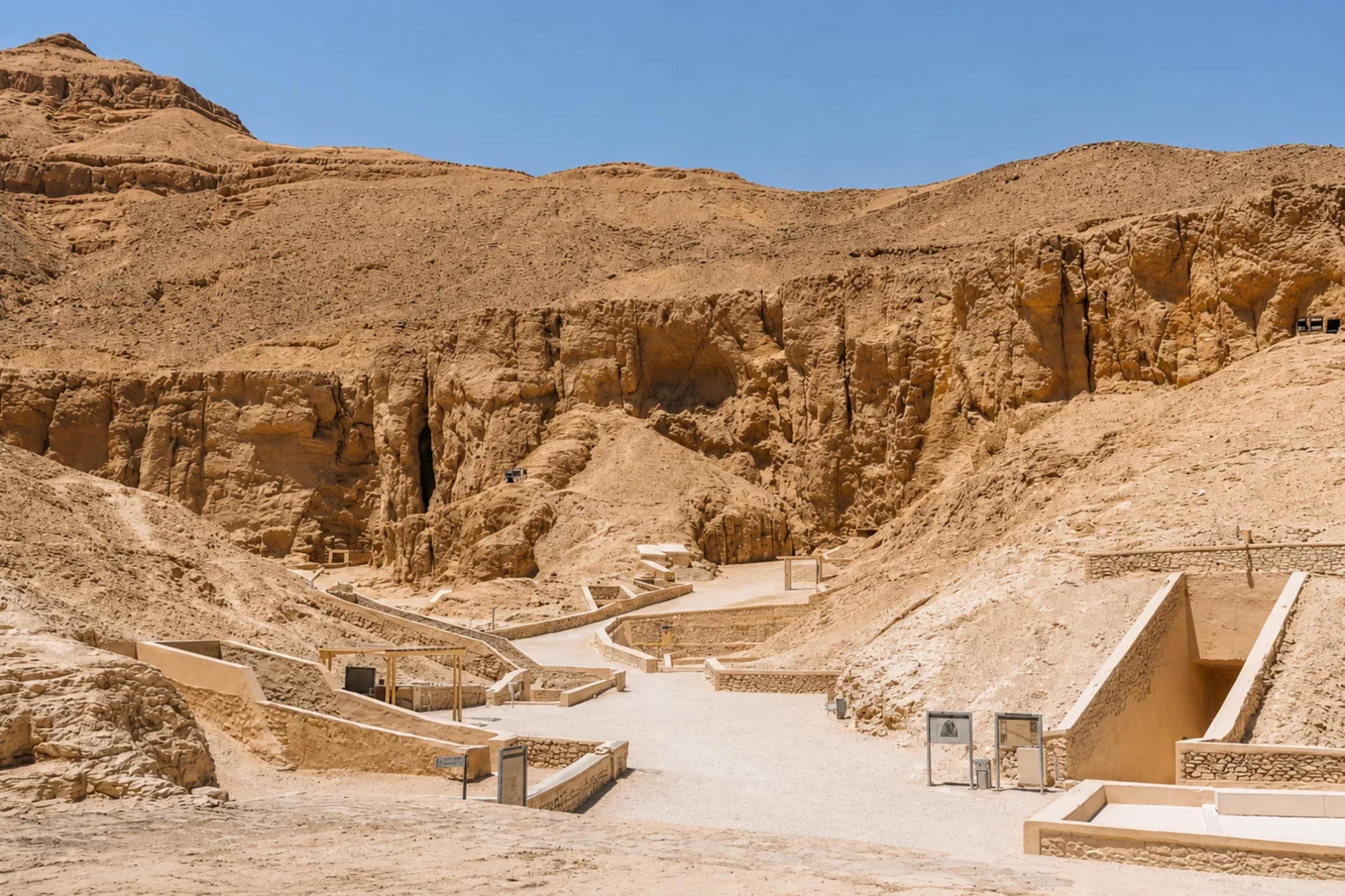
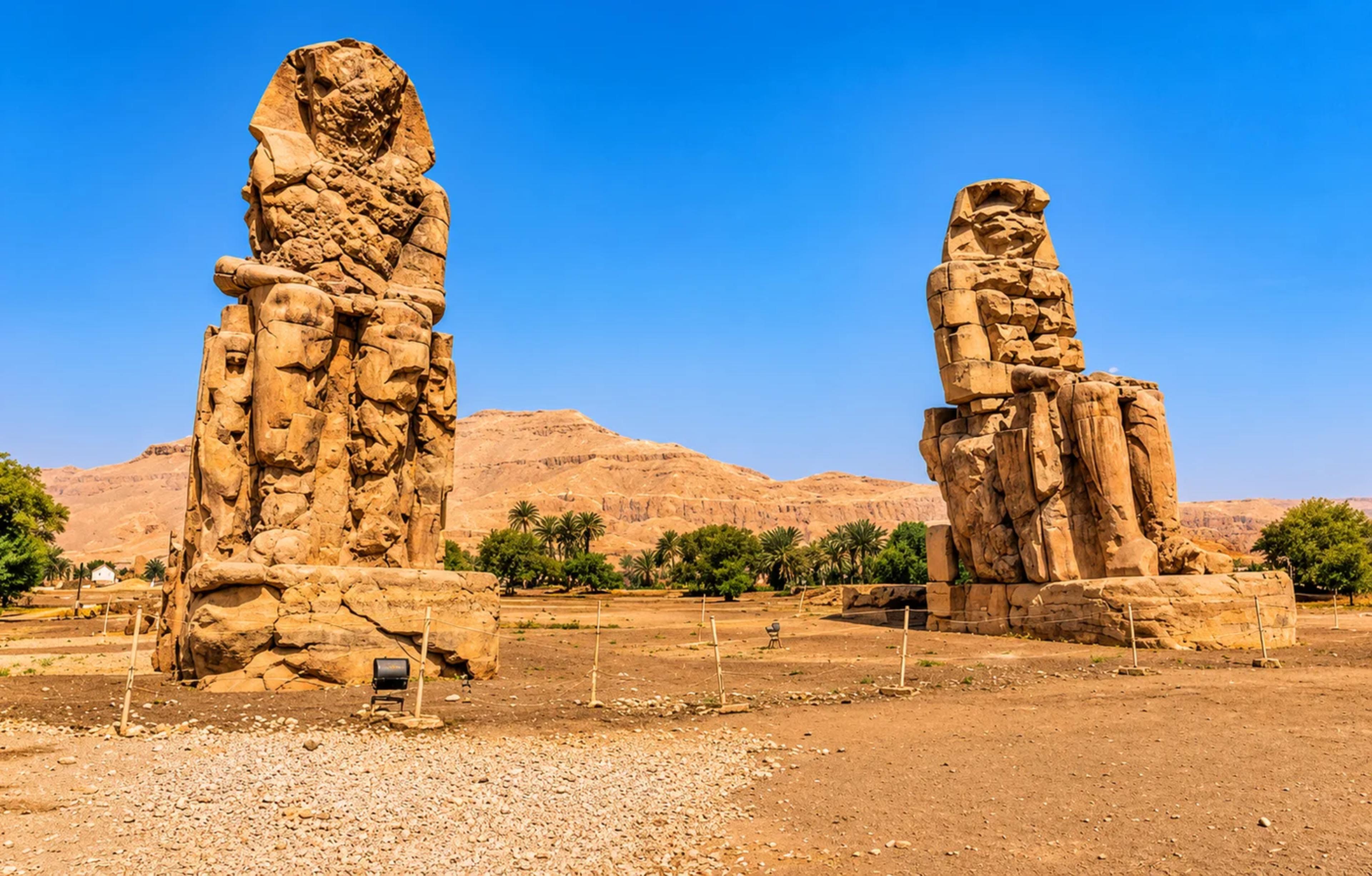
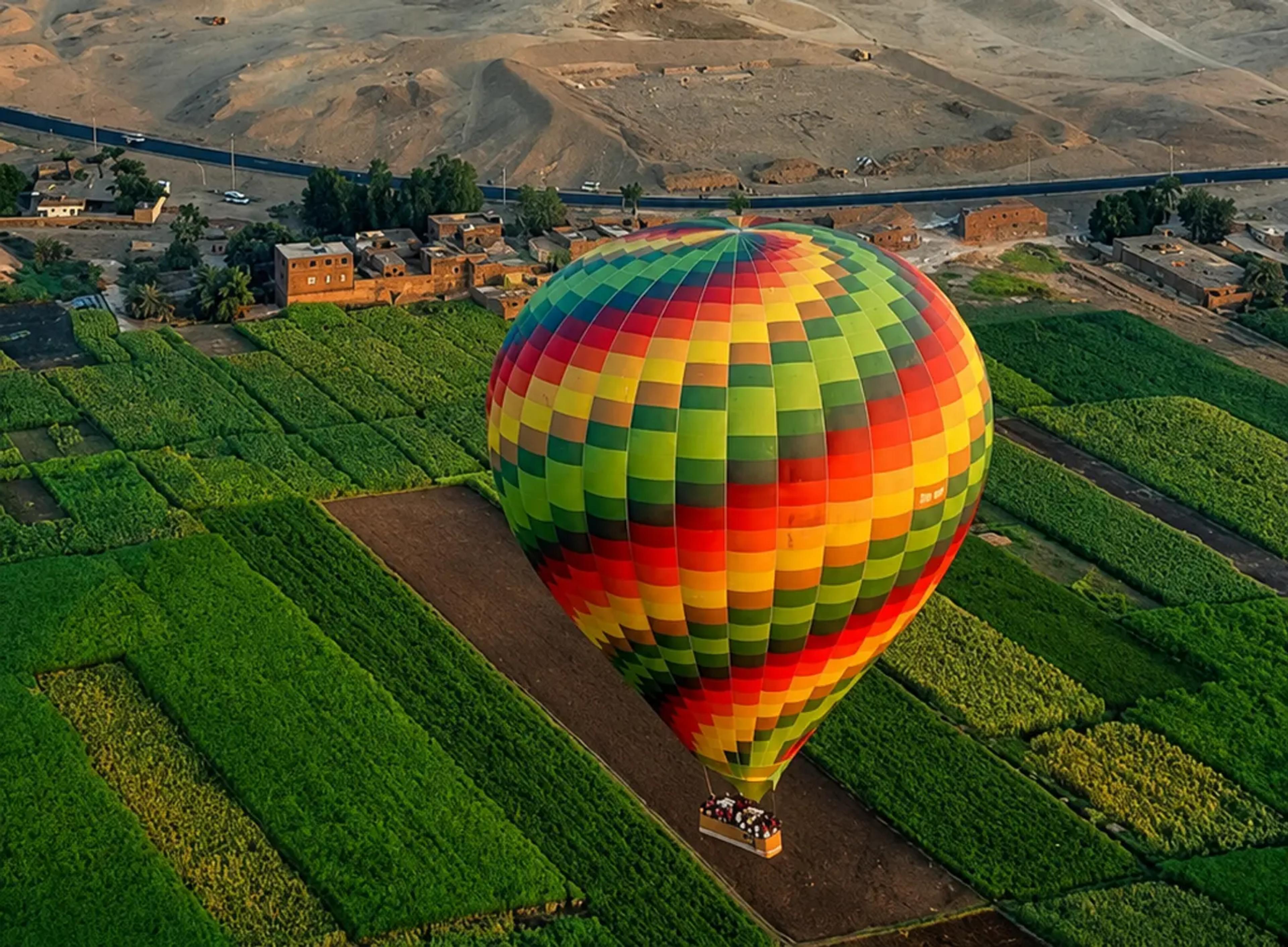
The West Bank is not primarily a tourist destination. It is a living place — the western shore of a city that has been continuously inhabited for at least four thousand years. The archaeological sites exist within a working landscape: date palms, sugar cane, irrigation channels, small fields of clover for the donkeys. The colossi of Memnon are beside a road that farmers use to get to their fields. The path to the Valley of the Kings runs past houses.
What these photographs are trying to record is the transition — the two hours between the crossing of the ferry and the arrival of the first tour coaches, when the West Bank is still in its own time. By 8 a.m. the coach parks are filling. By 9 a.m. the Valley of the Kings ticket office has a queue. By 10 a.m. the Hypostyle Hall at Medinet Habu has twelve tour groups moving through it simultaneously. The window closes quickly.
I have been shooting on film for this project — Kodak Portra 400, in a Leica M6 that belonged to my photography teacher and that I have been using for eight years. The choice is partly aesthetic and partly practical: film disciplines your shooting in a way that digital does not, because you have a finite number of frames and you cannot review what you have taken. You develop habits of seeing rather than habits of deleting. The West Bank at dawn, shot on Portra, has a quality of light that matches something I remember about how the place looks before the day fully arrives.
The image I find myself returning to from this series is the one of the Colossi of Memnon from the agricultural field side — the west side, not the road side that tourists typically approach from. From the field, the colossi appear against the limestone cliffs rather than against the sky, and the scale relationships are different. The statues look smaller and more embedded in the landscape. They look as if they belong to the place rather than sitting on top of it. I think that is closer to what they actually are — not a monument placed in a landscape, but a part of the landscape that was shaped into a monument.
This project does not have a finished form yet. I am still shooting. The West Bank in each season is different enough that a year of mornings would only begin to cover the variations. But the impulse that started it is simple: I wanted to see if photographs could show people what the West Bank is actually like at the hour when I love it most. Whether they do is a question I cannot answer from inside the project.